AMD technology · AI / HPC GPU
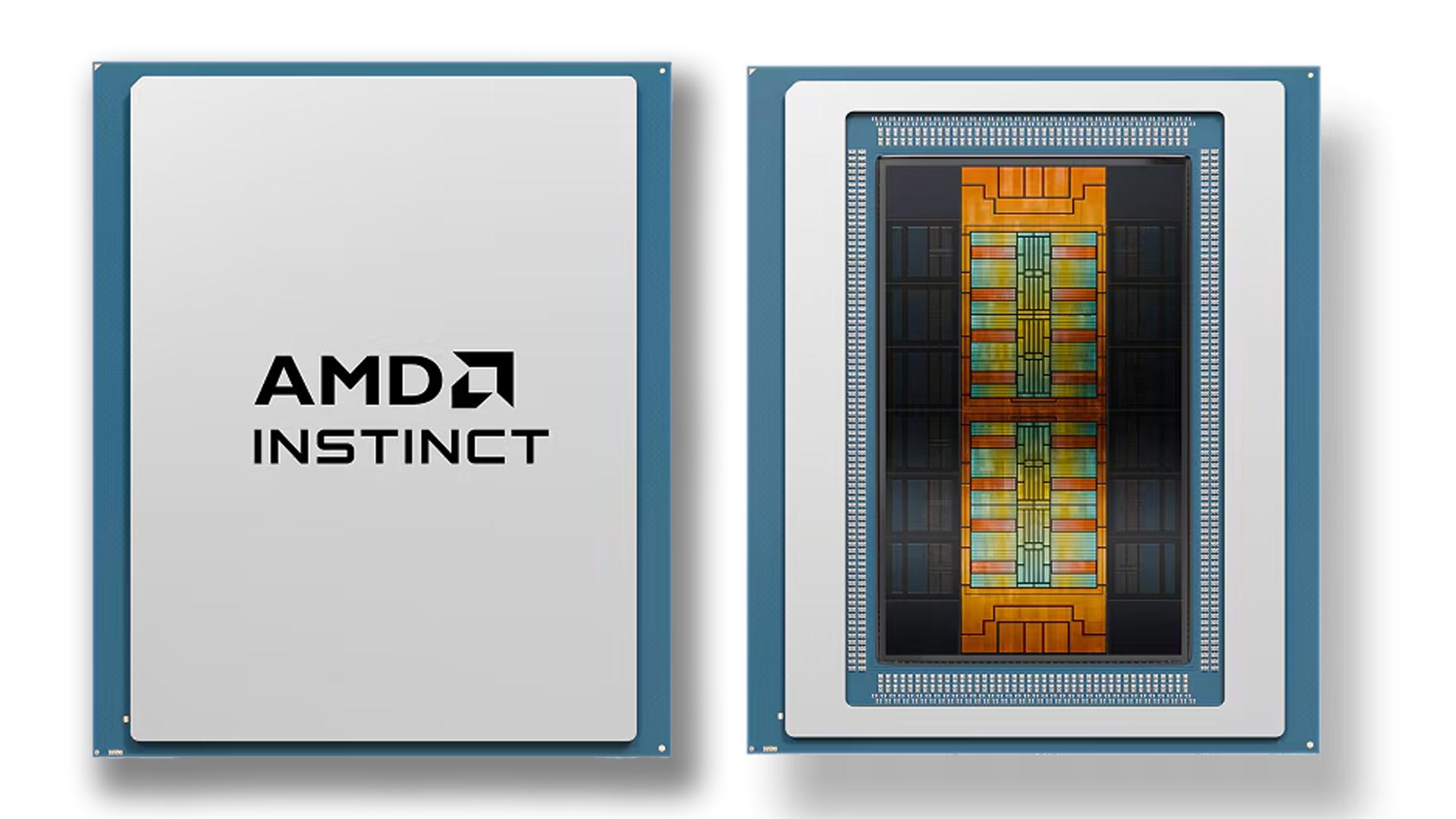
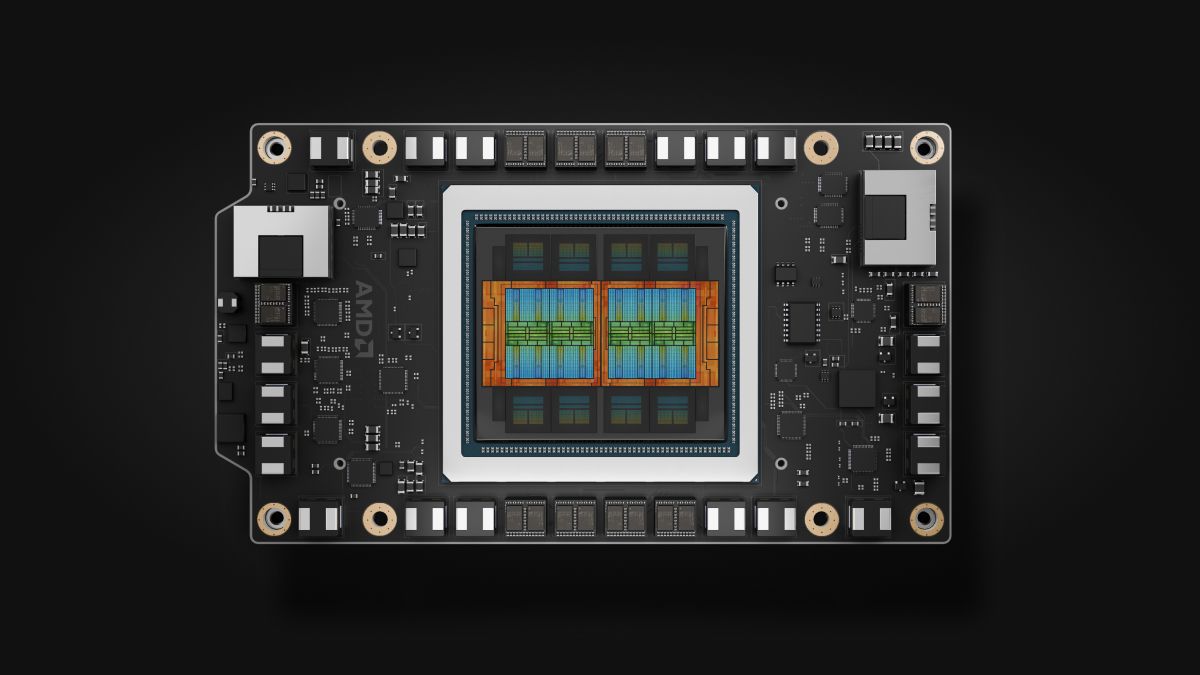
AI accelerators (MI210, MI300A, MI300X, and MI325X).
48 headlines
ASUS unveils a unified AI Factory blueprint at SC26, showcasing Intel Xeon 6, 6th Gen AMD EPYC 9006, AMD Instinct, and Intel GPU D-series server solutions.
AMD ROCm 10.2 is out today as the newest six-week feature release to this open-source AMD Radeon/Instinct GPU compute stack...
AMD is touting the benefits of the native FP64 support provided by its MI430X accelerator at Supercomputing 2026. The company says that Ozaki FP64 emulation only covers the needs of a small portion of HPC workloads, m…
A coding agent makes many model calls in one session, and each one re-sends almost everything before it: one recorded session makes 198 calls, and call #48 sends 195.5K tokens, only 1.3K of them new. Agentic workloads…
Neysa’s deployment is operational, expanding access to dedicated bare-metal AI infrastructure and accelerator choice for global customers and Indian enterprises.
Anthropic says Claude Mythos Preview brought up prompt processing for one model on AMD Instinct MI355X GPUs in about three days.
arXiv:2611.15951v1 Announce Type: cross Abstract: As GPU accelerators grow larger to meet rising compute demands, they exhibit increasingly pronounced non-uniform memory access (NUMA) characteristics that challenge ex…
AMD shares MI430X GPU updates, reports leadership measured inference performance for MI455X on the AMD Helios rackscale solution and introduces MI450X on AMD Helios. Nov. 12, 2026 — AMD is advancing the AMD Instinct M…
Deep learning and medical imaging are reshaping healthcare, from tumor detection in whole-slide pathology to whole-body segmentation in computed tomography (CT). But a medical imaging workflow isn’t a single step. A s…
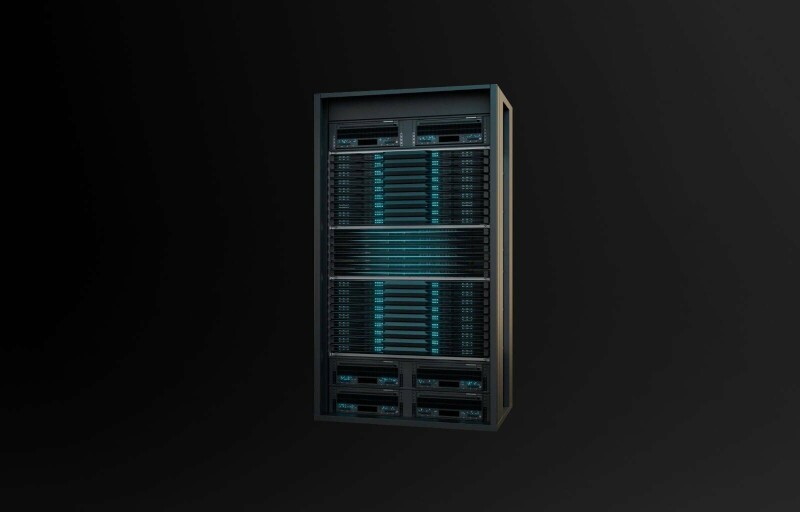
AMD shares leadership measured inference performance for MI455X on the AMD Helios rackscale solution and introduces MI450X on AMD Helios.
As GPU accelerators grow larger to meet rising compute demands, they exhibit increasingly pronounced non-uniform memory access (NUMA) characteristics that challenge existing LLM frameworks. Chiplet-based architectures…
NVIDIA's CUDA moat is quickly losing its primacy, at least as per a very interesting slide within Anthropic's IPO roadshow material, which shows GPUs as fungible compute resources, especially as highly capable models…
GLM-5.2 combines a large Mixture-of-Experts (MoE) architecture, sparse attention, and long-context processing. At long input lengths, this combination creates bottlenecks across GPU compute, memory bandwidth, and inte…
GLM-5.3-Flash runs on a single eight-GPU AMD Instinct™ MI300X node. The FP8 checkpoint is about 306 GB, roughly a fifth of the node’s 1,536 GB of HBM. During inference, most of the rest of the memory will be taken by…
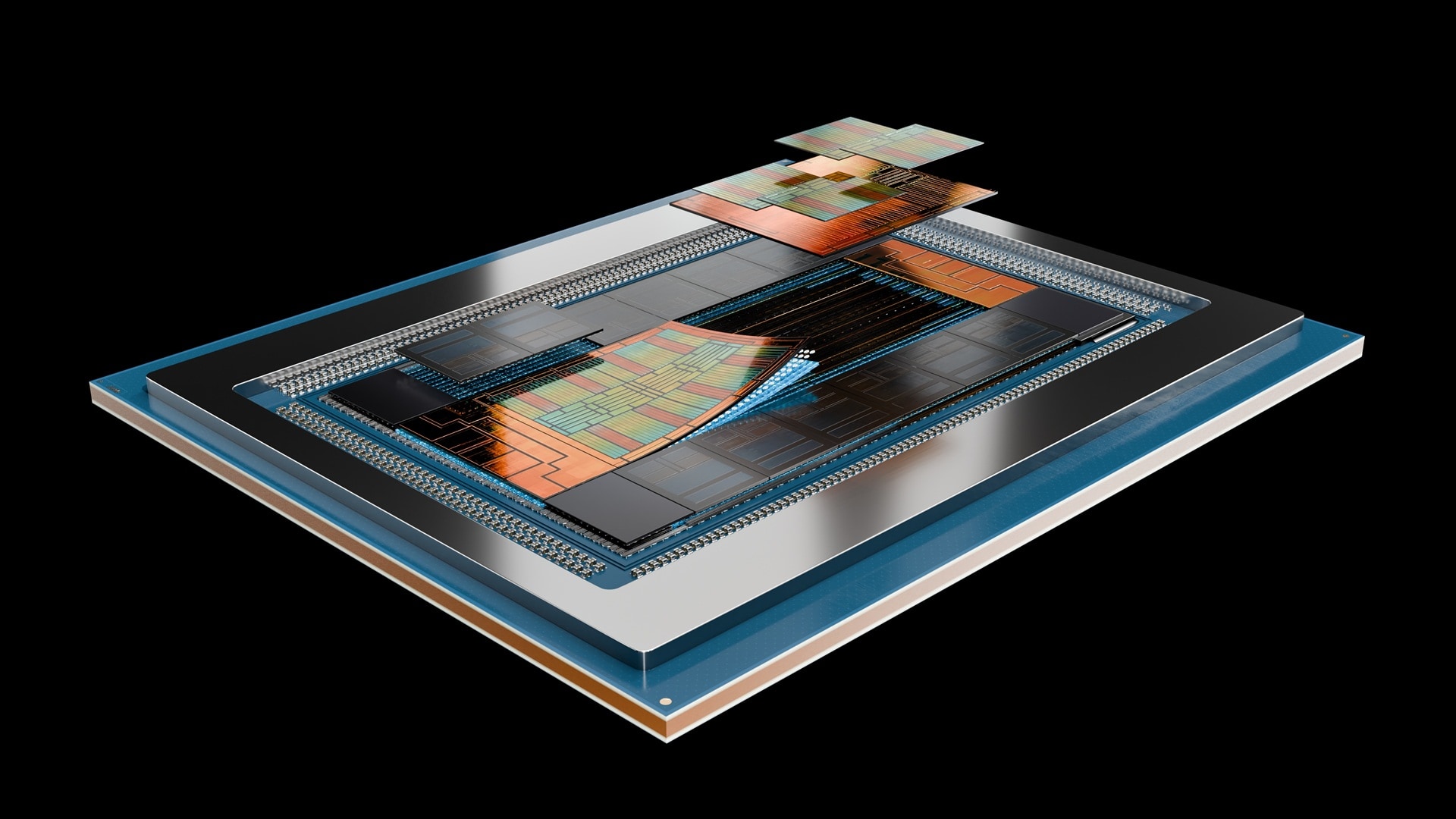
Cores, clocks, memory, and interconnects all perfectly balanced for a singular mission: keeping instinct fed.
Behind every well-trained medical imaging model is a painstakingly labeled dataset, and behind that dataset is a human expert drawing contours one slice at a time. MONAILabel exists to make that human faster. Develope…
PrimusClaw is an open-source managed agent runtime: a session store, an agent harness, and per-session sandboxes that you run in your own Kubernetes cluster, next to your AMD Instinct™ GPUs. In production use at AMD s…
Each new GPU generation is showcased by its peak instruction rates, yet users hardly ever run instructions directly: they reach the hardware's performance through vendor libraries, applications and devices shared with…
AMD's data center business surges as strong demand for Epyc processors and Instinct accelerators continues and sales of client hardware declines only slightly.
AMD data center revenue soared 97 percent in Q3 as EPYC and Instinct demand helped drive the company’s biggest quarter ever.
Coding agents send long, growing prompts, reuse earlier context, and run parallel tasks, which puts heavy pressure on an inference server. In this blog you will learn how we used the InferenceX AgentX benchmark to imp…
Video generation models are becoming a central workload for generative AI. Recent ROCm blogs have covered the broader Wan and diffusion ecosystem, including Wan2.2 fine-tuning [1], Wan2.2 distributed serving [2], audi…
AMD delivers record quarter as Data Center segment revenue grows 97% year-over-year, driven by record sales of AMD Instinct GPUs and AMD EPYC CPUs.
In this series of ROCm blogs, we are studying the impact of instruction scheduling on memory operations executed in lock-step. This post follows the introductory post and will focus on loading data from device memory…
The Medical Open Network for AI (MONAI) Model Zoo is often the first stop when a researcher is building a medical imaging application: a shared shelf of ready-to-use, peer-reviewed models, where you can find a whole-b…
We demonstrate end-to-end DeepSeek-V4 Flash reinforcement learning with an AITER-backed AMD RL stack on 24 AMD Instinct MI308X GPUs. Our test covers the complete workflow on three MI308X OAM nodes—not only inference o…
AMD & Meta are advancing their strategic partnership by deploying millions of EPYC CPUs, including 6th Gen Venice chips. Meta & AMD Strengthen Their Partnership Through EPYC CPU, Instinct GPU, & Rack-Scale Deployments…
In a previous blog, we looked at the serving side of EAGLE3 speculative decoding for large language models on AMD Instinct™ GPUs: ROCm and vLLM backend enablement, and AMD Quark FP8 draft-model quantization. Serving i…
A tiled general matrix multiplication (GEMM) computes on one pair of operand tiles while preparing the next. On a compute-bound shape, keeping the matrix units busy depends on how well those activities overlap. A comm…
A digital-pathology model is only as fast as the pipeline that feeds it. That’s simple to overlook when the conversation turns to network architectures and FLOPs, but on real whole-slide workloads the truth is stubbor…